PUBLIC INFORMATION ABOUT THE COMPLEXITY OF THE PAST
2015 · Five public signs · Lasermax and plywood
Five signs in Lopukhinsky Park, St Petersburg, recount historical events connected to the site. Selected for their resonance with the present, the stories explore changing relationships between East and West.
The work considers how a diverse collective memory can complicate one-sided understandings of the present and open possibilities for imagining the future.
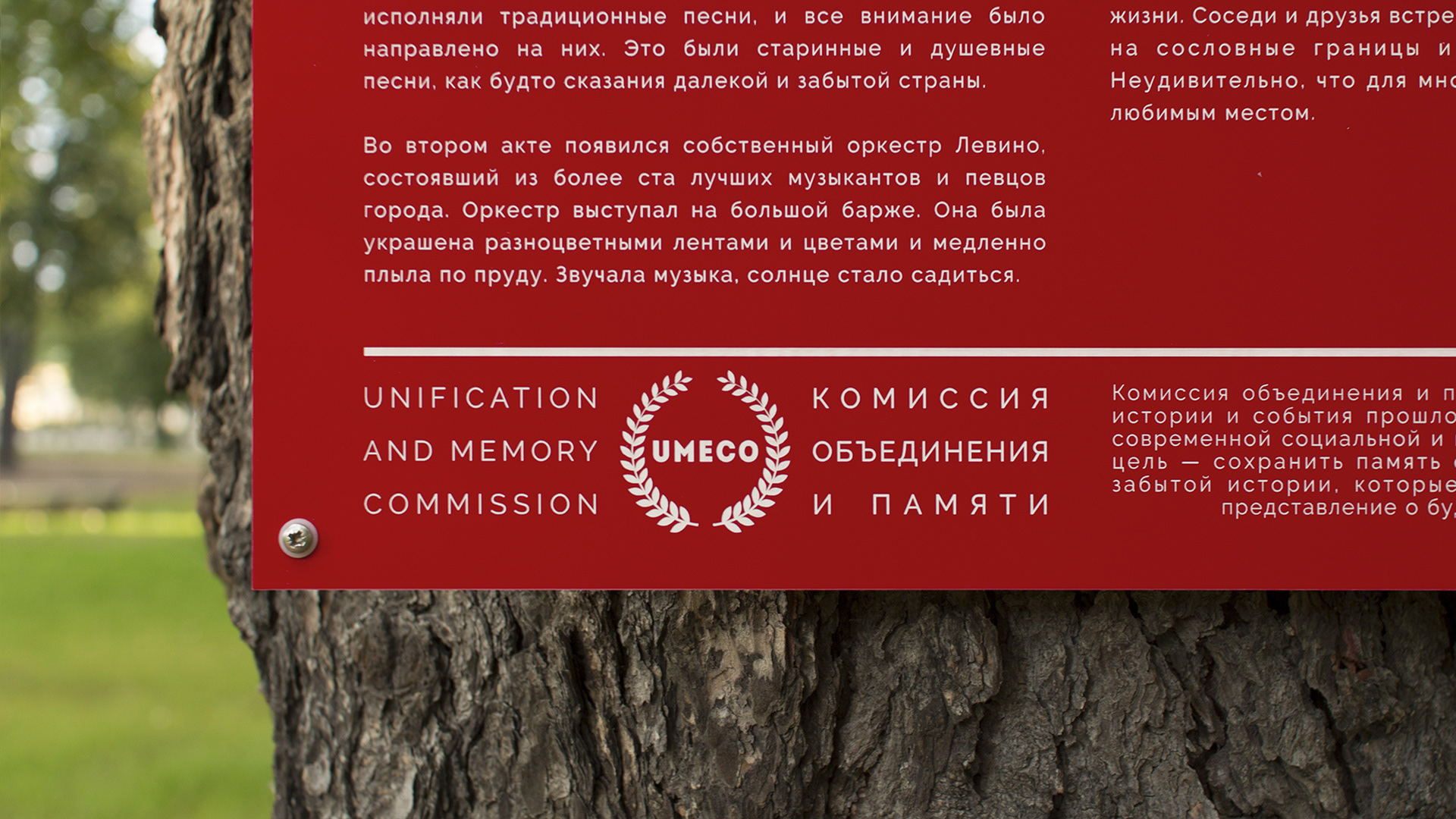
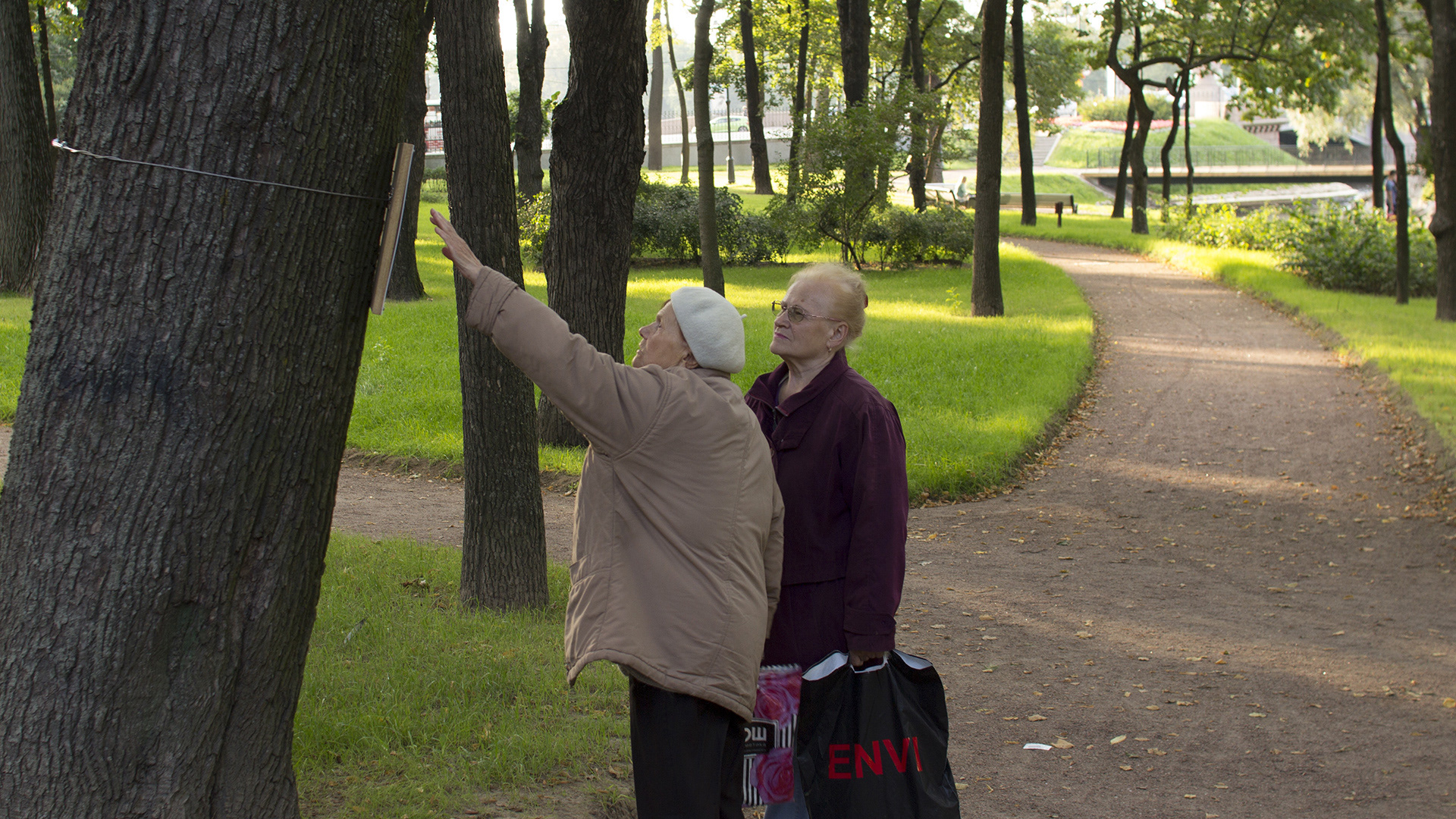

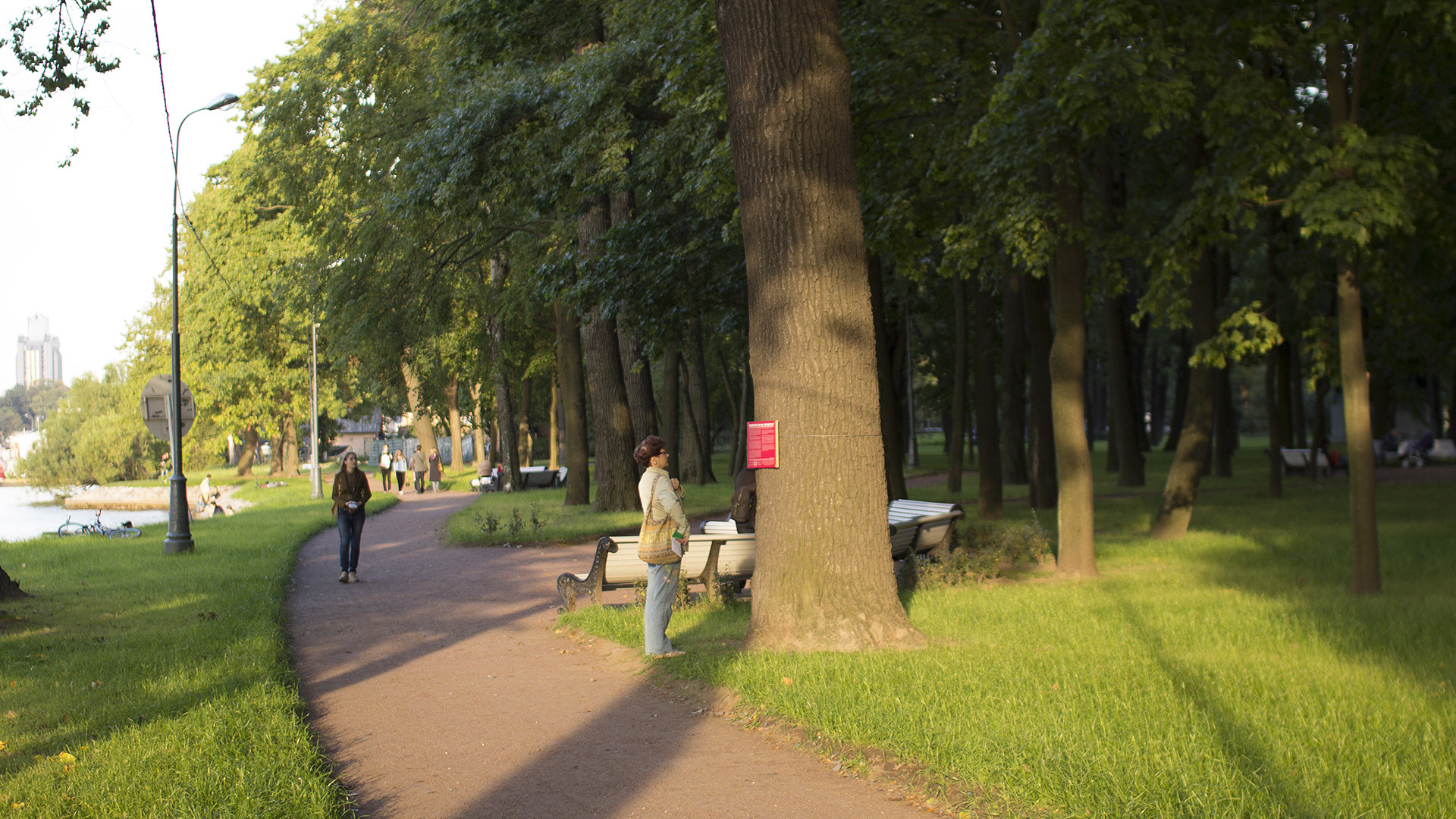
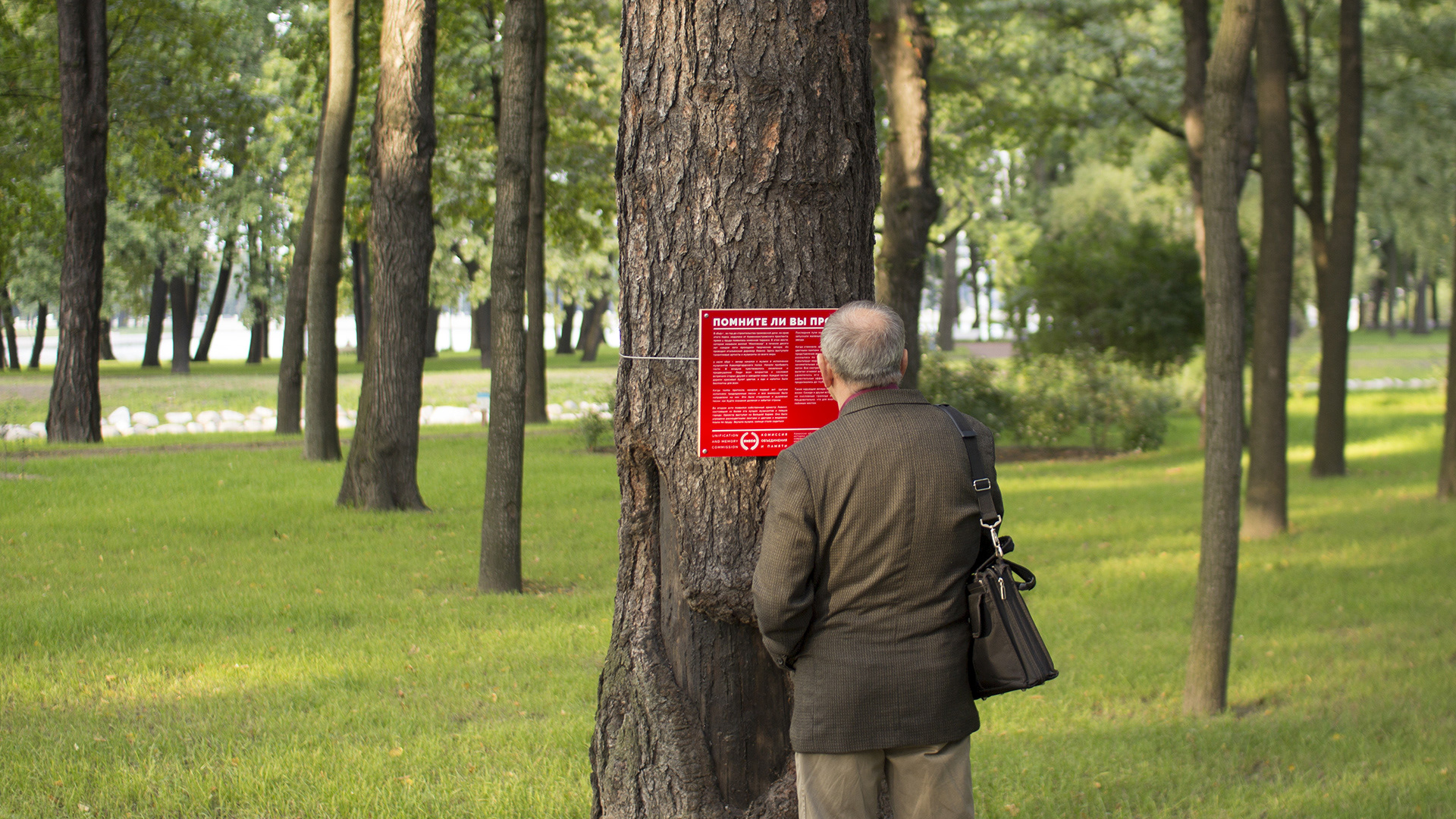
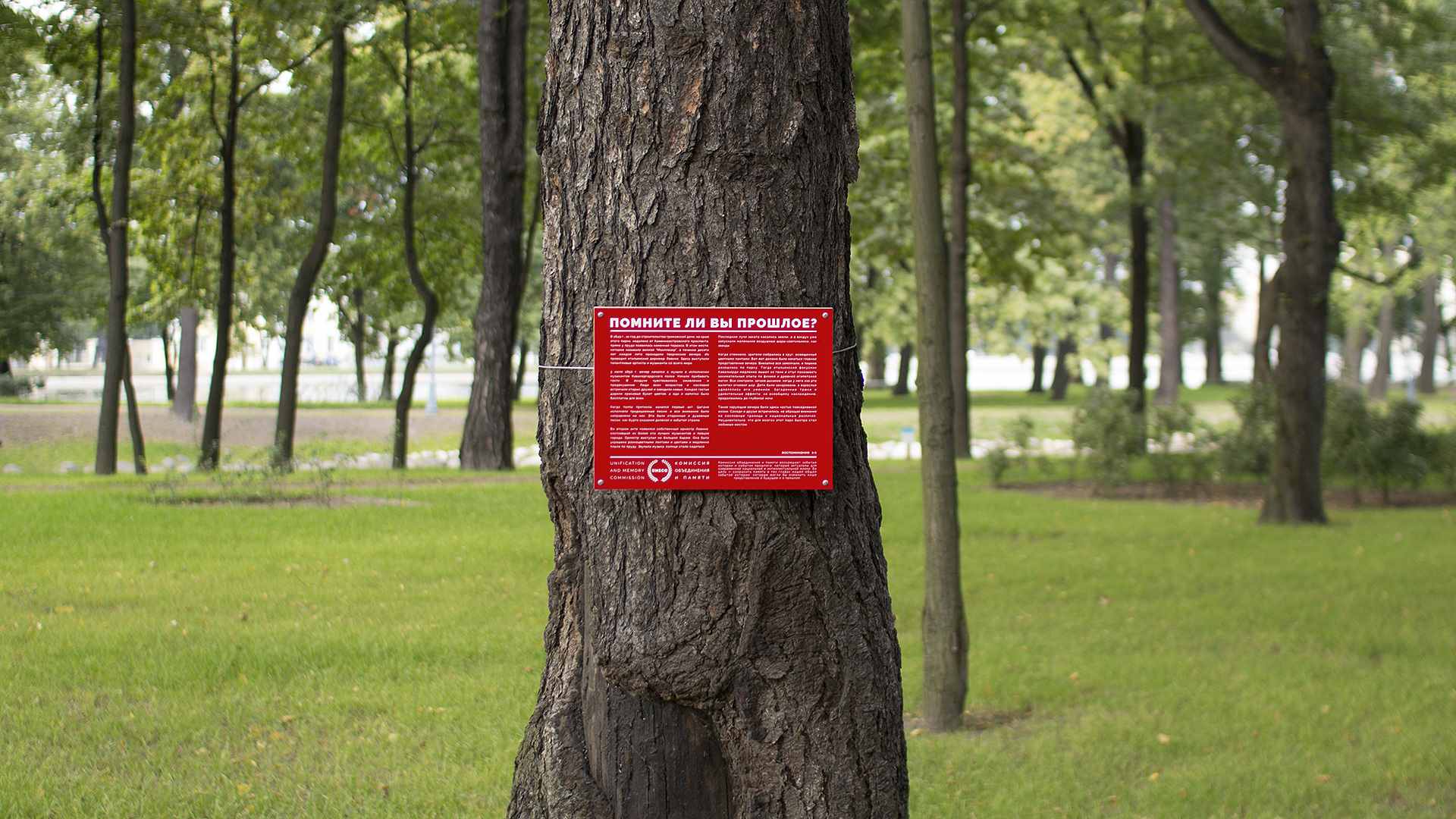
Public Information About the Complexity of the Past brings historical research into the everyday space of a public park. Its five signs recount events connected to Lopukhinsky Park and Gromov’s Dacha, approaching the site as a place where political, social and cultural histories intersect. Selected for their resonance with the present, the stories draw particular attention to changing relationships between East and West.
The signs adopt the familiar format of public historical information, inviting visitors to encounter these histories while moving through the park. Their selection and placement raise questions about how the past becomes publicly legible: which events are remembered, how they are framed, and how those accounts shape an understanding of the present.
The texts are attributed to “The Unification and Memory Commission,” an institutional identity created for the work. The name echoes the commission traditions of Soviet Russia while proposing another understanding of unification: bringing differences into relation through a shared engagement with memory. This assumed authority becomes part of the inquiry into who speaks for the past.
The work proposes that a diverse collective memory can make one-sided accounts of the present harder to sustain. Attending to historical complexity opens space for imagining different futures.
Presented as part of Critical Mass 2015, curated by the Creative Association of Curators TOK in St Petersburg.